
Coldfall Wood features a distinctive habitat known as a wet woodland. Put simply, a wetland is any area where the ground is either covered in shallow water or completely soaked with moisture for most of the year. Because Coldfall Wood sits on heavy London Clay, rainwater cannot sink deep underground. Instead, water pools on the surface, feeding damp patches, muddy ditches, and the Coppetts Wood stream that meanders through the trees.
To enhance these habitats, local conservationists have introduced natural wood barriers known as “leaky dams.” These fallen logs and branches slow down fast-flowing rainwater, allowing it to spill out into small, shallow scrapes across the forest floor. These artificial wetland scrapes ensure that parts of the woodland remain damp and boggy year-round, even during drier summer months.
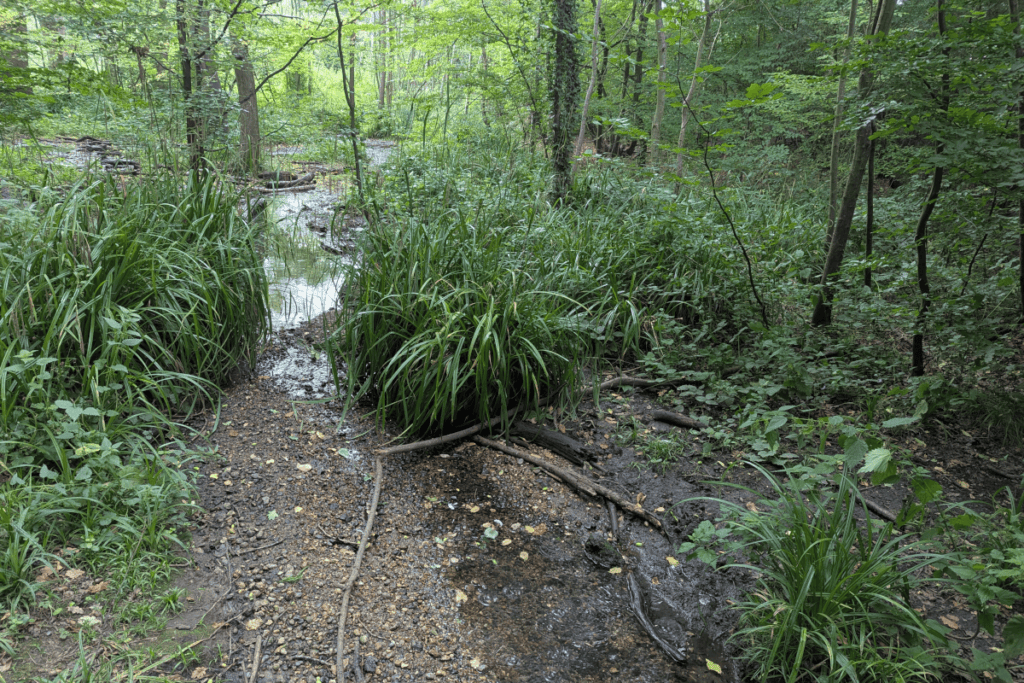
The plants in these wet zones are specifically adapted to waterlogged soil where air is scarce. Water-loving trees like alder and willow thrive near the stream edges, while ancient hornbeam trees line the historical boundary ditches. On the forest floor, moisture-seeking wildflowers spring to life, including bright yellow marigolds, delicate yellow pimpernels, and pungent wild garlic (ramsons), alongside tall yellow irises and soft rushes. Thick, sponge-like carpets of moss grow over the wet soil and fallen logs, retaining water like natural reservoirs.
These wetlands play an crucial role in supporting urban wildlife and protecting the surrounding area. By storing heavy rainfall, the boggy ground acts as a natural buffer that filters pollutants and prevents sudden flooding downstream in local neighborhoods.
Finally, the damp environment serves as a vital sanctuary for animal life. The standing pools provide ideal breeding sites for common frogs, toads, and smooth newts, while the soft, damp earth is rich in earthworms and insect larvae. Nocturnal mammals like bats, wood mice, and foxes regularly forage through these damp zones for food. Meanwhile, decaying trees in the waterlogged soil host wood-boring beetle larvae, attracting great spotted woodpeckers, grey wagtails, and song thrushes to hunt along the muddy stream banks.